Daily Weather
- 3.8
- Rating
- 10.00M
- Installs
- Free
- Price
 Analysis by App-foxy
I installed Daily Weather because checking the forecast should not become a small research project every morning. I wanted a quick answer to simple questions: should I carry an umbrella, is a walk practical, and will the temperature change enough to affect my plans? In my experience, this app is built around reducing that repeated decision-making rather than turning weather into a complicated dashboard.
That focus is useful. Weather apps often compete by adding layers of maps, alerts, widgets, radar views, and long-range details. Those tools can be valuable, but they also make a basic forecast feel crowded. Daily Weather, developed by P & L Studio, takes a more approachable position as a free weather app for everyday checking. It is suitable for Everyone, works on Android devices running version 6.0 or later, and has reached over 10 million installs.
The main benefit is time saved during ordinary routines. You open it, look for the information that affects the next part of your day, and move on. That sounds modest, but it is exactly the kind of small convenience I notice after using an app repeatedly. It will not replace a specialist weather service for every situation, yet it can make the daily forecast less of a chore.
You May Also Like

 Blood Strike: 2.5 Anniversary
Blood Strike’s Loadouts Turn Every Drop Into a Tactical Gamble
A close look at Blood Strike’s custom loadouts: how fast access to signature weapons reshapes its battle royale rhythm, rewards preparation, and narrows the gap between fights.

 Pandora - Music & Podcasts
Pandora’s Music Is Easy to Start, but Harder to Recover
Pandora’s strength is its low-effort path from a seed to a station. Its weak spot is how much confidence it asks you to place in connection, setup, and quiet recovery.

 8 Ball Pool
 Is Built on Rivalries, Rematches, and Routine
A close look at the rivalries, rematches, shared routines, and unanswered safety questions that turn a quick pool match into a persistent mobile community.

 Samsung Music
’s Quiet Strength Is Playing What You Already Own
Its reach comes less from spectacle than from dependable access to a personal library. That simplicity is both the app’s strongest retention engine and its ceiling.

 AccuWeather: Weather Radar
AccuWeather Review: A Quick, Clear Forecast for Everyday Decisions
For everyday plans, the best forecast is the one you can understand quickly. AccuWeather makes rain timing, radar, and local conditions easy to act on, with a few trade-offs.

 Hill Climb Racing
Why Hill Climb Racing Still Turns Crashes Into One More Run
A tiny car, a bumpy hill and one more upgrade: Hill Climb Racing keeps resurfacing because its simple chaos makes every near-miss feel personal.
More From Our News Desk
View All News


Daily Weather review: a practical forecast for repeated decisions
I look at Daily Weather as a tool for making everyday plans with less second-guessing, rather than as a replacement for every weather source. In the sections ahead, I’ll focus on where that quick-check approach earns its keep and where I’d want more context. One useful habit is to check at the moment a decision changes—before leaving or committing to an outdoor plan—rather than refreshing out of uncertainty.
Why a simple weather check matters
The recurring problem is not usually a lack of weather information. It is having too much of it, spread across different screens and presented with varying levels of importance. Before leaving home, most people do not need a detailed meteorological lesson. They need enough confidence to choose clothing, plan transport, protect a device or decide whether an outdoor activity is sensible.
I found Daily Weather most appealing in those short moments when I had no patience for browsing. A forecast app earns its place when it answers the same questions consistently: what is happening now, what is likely later, and whether my plan needs a small adjustment. The app’s “Daily Weather” identity suits that use better than an experience designed mainly for enthusiasts.
Its audience is therefore fairly clear. If you want a straightforward way to check conditions before work, school, errands or a walk, it is easy to understand why this app has attracted a large user base. The average rating is 3.9 from around 42 thousand ratings, which suggests a broadly useful experience with enough room for individual preferences and occasional frustrations. I would read that rating as “worth trying, but not automatically perfect for everyone.”
That distinction matters because weather is personal. Someone who only checks the temperature twice a day may be satisfied with a clean, direct forecast. Someone who plans photography around cloud cover, manages outdoor work, or travels through changing conditions may expect more depth and precision. Daily Weather feels more appropriate for the first group than the second.
Getting to a useful first check
The first useful setup is not about spending a long time customizing the app. I approached it with one goal: make the current location and the day’s forecast easy to read. A weather tool loses much of its value if the first screen forces you through unnecessary decisions before showing practical information.
When I review an app like this, I pay attention to the difference between information being available and information being usable. A forecast can contain all the right elements but still waste time if the most important details are visually buried. Daily Weather works best when I treat it as a quick reference rather than a place to explore every possible weather detail.
My advice is to establish a small checking habit instead of repeatedly opening the app without a purpose. I look once when planning the day and again before leaving if the weather could affect the next few hours. That approach makes the app part of a routine, not another notification-heavy distraction. It also helps me judge whether the forecast is useful for my own location and schedule.
Another practical tip is to compare the forecast with the decision you actually need to make. If you are deciding whether to take a jacket, the current temperature and expected change matter more than a distant outlook. If you are deciding whether to schedule time outdoors, the forecast for the relevant part of the day matters more than a general impression of the week. This sounds obvious, but it prevents the common mistake of reading a forecast without translating it into an action.
How I use it through a normal day
A realistic morning example is a commute followed by an outdoor appointment. I open Daily Weather while getting ready, check whether conditions look stable, and decide whether carrying rain protection is worthwhile. Later, before leaving the office, I check again rather than relying on memory. The app is useful here because the task is repeated but brief: I am not trying to study the atmosphere, only to avoid an uncomfortable or inconvenient choice.
For parents, the same workflow can help with school runs and after-school activities. The useful question is not simply whether the day is “good” or “bad.” It is whether the child needs an extra layer, whether a playground visit is realistic, or whether a change of plan would be sensible. A quick forecast check can reduce last-minute decisions, especially when the morning and afternoon feel different.
I also see value for people who walk or cycle short distances. A forecast does not remove uncertainty, but it can make the choice more deliberate. If the conditions look manageable, I can leave prepared. If they look unsuitable, I can choose another option before I am already halfway there. This is where a low-friction weather app earns more value than a feature-rich alternative that takes longer to consult.
For travel within a familiar area, Daily Weather can be a convenient first check before opening a broader travel or mapping tool. It is not a substitute for researching severe conditions or a complicated journey, but it can answer the immediate question of whether the next trip needs a change in clothing or timing. I like that separation of jobs: use a simple weather app for a simple decision, then move to a specialist source when the stakes are higher.
Small workflow improvements that make it more useful
One non-obvious lesson from using a daily forecast app is that consistency matters more than constant checking. Looking at the forecast every few minutes does not necessarily produce better decisions. I get more value by checking at natural transition points: before leaving home, before an outdoor plan, and before the return journey. That keeps the app useful without allowing it to take over the day.
A second useful trade-off is deciding how much detail I really need. More forecast information can create false confidence, especially when I start treating every small change as a precise promise. Daily Weather is better approached as a planning aid. I use it to prepare for likely conditions, not to assume that the forecast can guarantee exactly what will happen at a particular minute.
A third insight is that the app can act as a decision filter. Instead of asking “What does every part of the forecast say?”, I ask “What could make today’s plan uncomfortable or impractical?” That might be rain, a noticeable temperature shift or a generally unsuitable period for being outside. This way of reading the app reduces mental clutter and makes the information more actionable.
There is also a useful boundary between routine and exceptional weather. For a normal commute or a grocery trip, a quick glance may be enough. For a hike, a long drive, work at height or any activity where changing conditions create real risk, I would not rely on one general-purpose app alone. I would consult more detailed official or specialist sources as well. That is not a failure of Daily Weather; it is a reminder that convenience and depth are different goals.
Where the app removes friction
The strongest friction it removes is the need to turn a basic question into a long search. I do not want to compare several pages simply to decide whether to leave five minutes earlier or take a coat. A focused weather app makes that decision feel proportionate to the problem.
It is also helpful for people who are not particularly interested in weather. Enthusiasts may enjoy maps and technical readings, but many users want a calm, readable answer without learning a new interface. Daily Weather’s everyday positioning makes it easier to recommend to a friend who has previously found weather apps too busy or too detailed.
The free price lowers the barrier to trying it. That is important for a utility app because the benefit is incremental: it saves a little time on many days rather than creating one dramatic experience. There are in-app purchases ranging from $0.99 to $11.99 per item, so I would still check which optional elements are relevant before spending money. The basic appeal is the quick daily check, and I would judge any purchase by whether it genuinely reduces effort in my own routine.
The current version is 1.8.09, and the app has been available since January 4, 2021. Those details give the product some history rather than making it feel like a brand-new experiment. Still, an established app is not automatically the right fit for every phone or every expectation. I would confirm that the device meets the Android 6.0 minimum before installing, especially if it is older.
What I would improve before recommending it to everyone
The first limitation is that simplicity can become a weakness when I need context. A quick daily view is excellent for routine choices, but it is less satisfying when I want to investigate why conditions are changing or compare several locations in depth. If your decisions depend on detailed weather interpretation, a more specialized service may be a better primary tool.
The second limitation is the natural uncertainty of forecasts. Even a well-designed interface cannot make weather perfectly predictable. I would avoid using Daily Weather as the sole basis for high-consequence plans. For ordinary decisions, that uncertainty is acceptable; for demanding outdoor work or travel, I want additional confirmation and more detailed information.
The third issue is that the app’s value depends heavily on how quickly its presentation matches my needs. Some users prefer a dense screen with every figure visible immediately, while others prefer a simpler overview. If you enjoy customizing every part of a weather dashboard, Daily Weather may feel restrained. If you dislike crowded forecast screens, that same restraint may be exactly why it works.
I also would not recommend it as the only weather app for someone who needs professional-grade planning, detailed local analysis or extensive travel forecasting. A specialist alternative can be better when the forecast itself is central to the activity. Daily Weather is more convincing when weather is one small factor in a larger day and I simply need to account for it without delay.
Who should install it?
I would recommend Daily Weather to someone who wants a free, uncomplicated way to check the day before leaving home. It suits commuters, students, parents, walkers and anyone who repeatedly makes small weather-related decisions. The app is especially practical for people who feel that many weather tools give them more information than they can use.
I would be more cautious about recommending it to weather enthusiasts or users with demanding outdoor routines. They may prefer a service that emphasizes depth, specialized views and more detailed planning. In that case, Daily Weather can still serve as a convenient first glance, but it should not be the only source they consult.
The age rating of Everyone also makes it an easy household recommendation from a content standpoint. Combined with its broad availability on older Android versions, it is accessible to a wide range of users. I would still base the final choice on the way each person likes to read forecasts, because interface preference matters more than install numbers for a utility used several times a week.
My final take after using it
Daily Weather succeeds when I judge it by the problem it is trying to solve: repeated, low-level uncertainty about the day ahead. It saves time by keeping the weather check close to the decision, removes friction by avoiding an unnecessarily complicated routine, and gives casual users a sensible starting point.
It is not the app I would choose for detailed meteorological planning, serious outdoor risk assessment or a highly customizable weather workstation. Those needs call for a different kind of tool. But for a quick morning check, a second look before an appointment and a little more confidence about what to wear or carry, it is a practical option.
My recommendation is to try the free version with a specific routine in mind rather than judging it after one casual glance. Use it before your commute, before an outdoor plan and before heading home. If it consistently helps you make those decisions faster, its modest design is doing its job. If you keep searching for deeper forecast context, you will probably be happier with a more specialized alternative.
Overall, Daily Weather is best understood as a dependable everyday companion rather than a complete weather command center. P & L Studio has created an app with a clear purpose, and my experience is that it is most successful when I let it remain focused on that purpose. For routine weather awareness, I would recommend giving it a place on the phone of anyone who values a quick answer over a crowded screen.
FAQs for Daily Weather
01What features does the Daily Weather app offer?
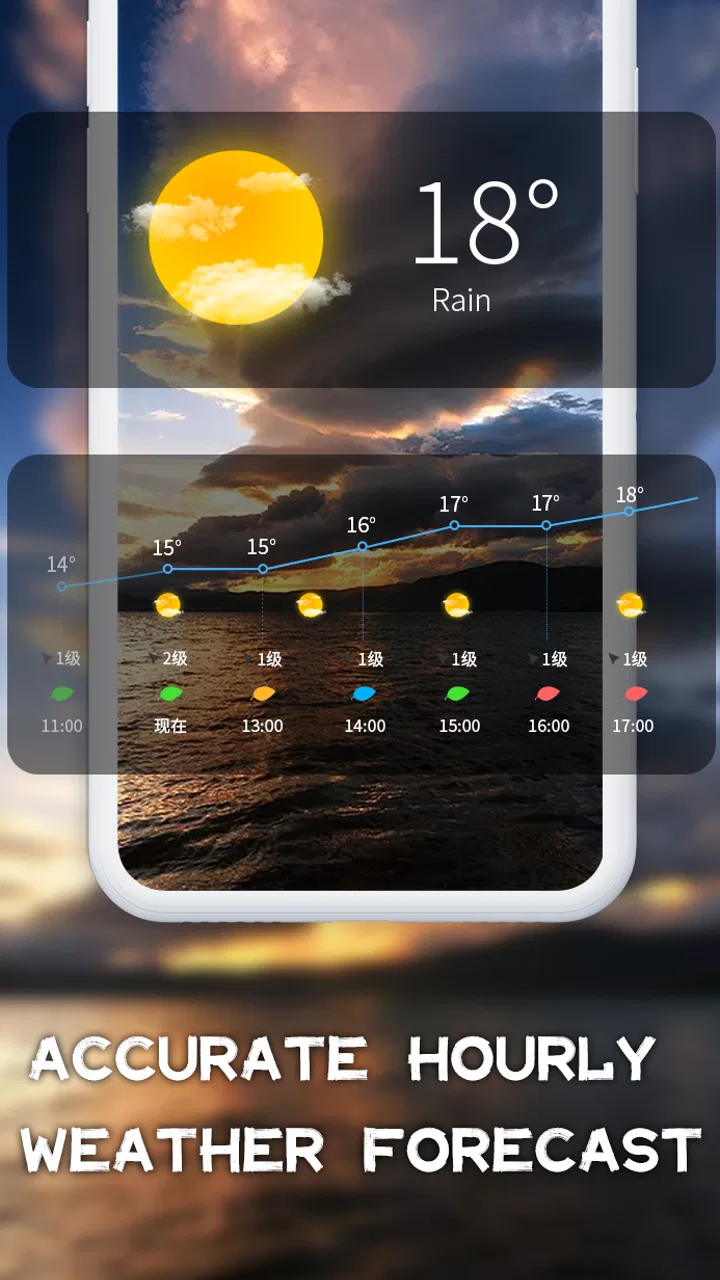
Daily Weather provides real-time weather updates, detailed forecasts, and severe weather alerts. Users can access hourly and weekly forecasts, interactive radar maps, and weather widgets for quick updates. The app also offers customizable notifications and supports multiple locations, making it ideal for travelers or those monitoring weather in different areas.
02Is the Daily Weather app free to use?
Yes, the Daily Weather app is free to download and use. However, it offers in-app purchases for premium features, such as an ad-free experience and advanced forecast details. These premium features enhance user experience but are not necessary for basic weather updates and alerts.
03How accurate is the weather information provided by Daily Weather?
Daily Weather sources its data from reliable meteorological agencies and uses advanced algorithms to deliver accurate forecasts. While no weather app can guarantee 100% accuracy, Daily Weather is known for providing precise and timely updates. For critical weather conditions, it is advisable to cross-reference with other trusted sources.
04Does Daily Weather require internet access to function?
Yes, Daily Weather requires an internet connection to provide real-time updates and accurate forecasts. While some basic information might be cached, for the most current data, including live radar and alerts, an active connection is necessary. Offline functionality is limited primarily to previously downloaded data.
05How does the Daily Weather app handle user privacy?
Daily Weather takes user privacy seriously and follows strict data protection protocols. The app only requests necessary permissions, such as location data for accurate forecasts. Personal data is not shared with third parties without consent. Users can review and adjust privacy settings within the app to ensure they are comfortable with the data usage.
Pros
- Accurate forecasts with real-time updates.
- User-friendly interface with intuitive navigation.
- Customizable weather alerts and notifications.
- Detailed hourly and weekly weather breakdowns.
- Supports multiple locations for easy tracking.
Cons
- Ads can be intrusive during app use.
- Limited features in the free version.
- Occasional lag on older devices.
- Requires constant internet for updates.
- Some users report minor location inaccuracies.

Daily Weather
Gallery